



Ethernet UV sensor PLC.net with PoE
The PLC.net is a ready-to-install UV sensor with a LAN connection for the digital measurement of UV irradiance in industrial plants, laboratory setups and automated test benches. It processes the readings inside the sensor and provides them via HTTP with JSON output and via Modbus TCP (port 502, Float32 in mW/cm²). UV processes can therefore be monitored and documented continuously and integrated into PLC, SCADA and test software without additional measuring hardware. Power is supplied via PoE, and an integrated web server exports the data as CSV.
The measured values are processed directly within the sensor and made available via Ethernet. This allows UV processes to be continuously monitored, documented, and integrated into existing control and data acquisition systems.
Communication takes place via an HTTP interface with JSON output as well as via Modbus TCP. The UV sensor is therefore suitable for applications where current measurement values, device information, calibration data, and status parameters must be available over a network. Direct access to the integrated web server also allows measurement data to be exported in CSV format.
The JSON data structure enables easy integration into software applications, data loggers, process control systems, and customer-specific testing software. Measurement values and metadata can be automatically read, archived, and further processed for quality assurance.
For direct integration into industrial automation systems, the UV sensor supports Modbus TCP. Communication takes place via standard port 502. The measured values are available in the Float32 data format and in the unit mW/cm². This allows the sensor to be integrated directly into PLC systems, SCADA environments, and industrial measurement data acquisition systems.
A physical button on the sensor housing allows important service functions to be performed even without network access. A short press of the button restarts the system. A medium-length press activates DHCP server mode for direct connection to a laptop. A long press resets the sensor to factory settings.
Highlights of the PLC.net UV Sensor
- Digital measurement of UV irradiance via Ethernet
- Power supply via PoE
- HTTP interface with JSON output
- Modbus TCP for integration into PLCs and process control systems
- Measurement output in mW/cm²
- Integrated web server with CSV export and runtime graph
- Support for multiple measurement channels and lamp assignments
- Service button for restart, DHCP mode, and reset to factory settings

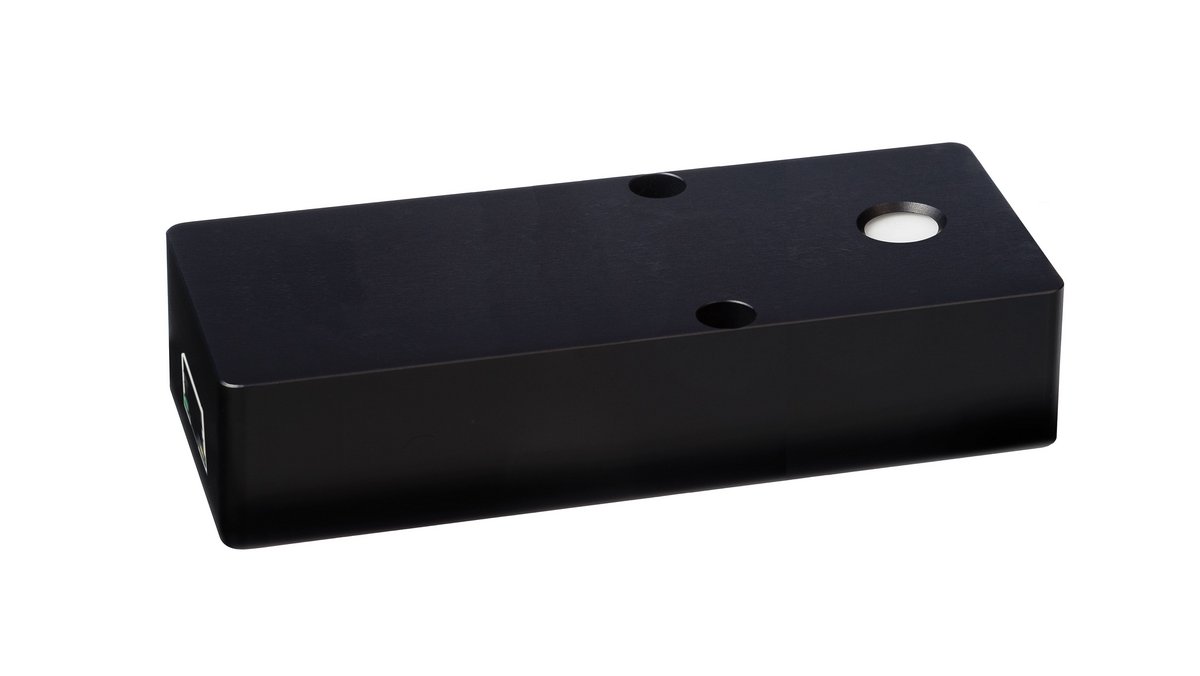
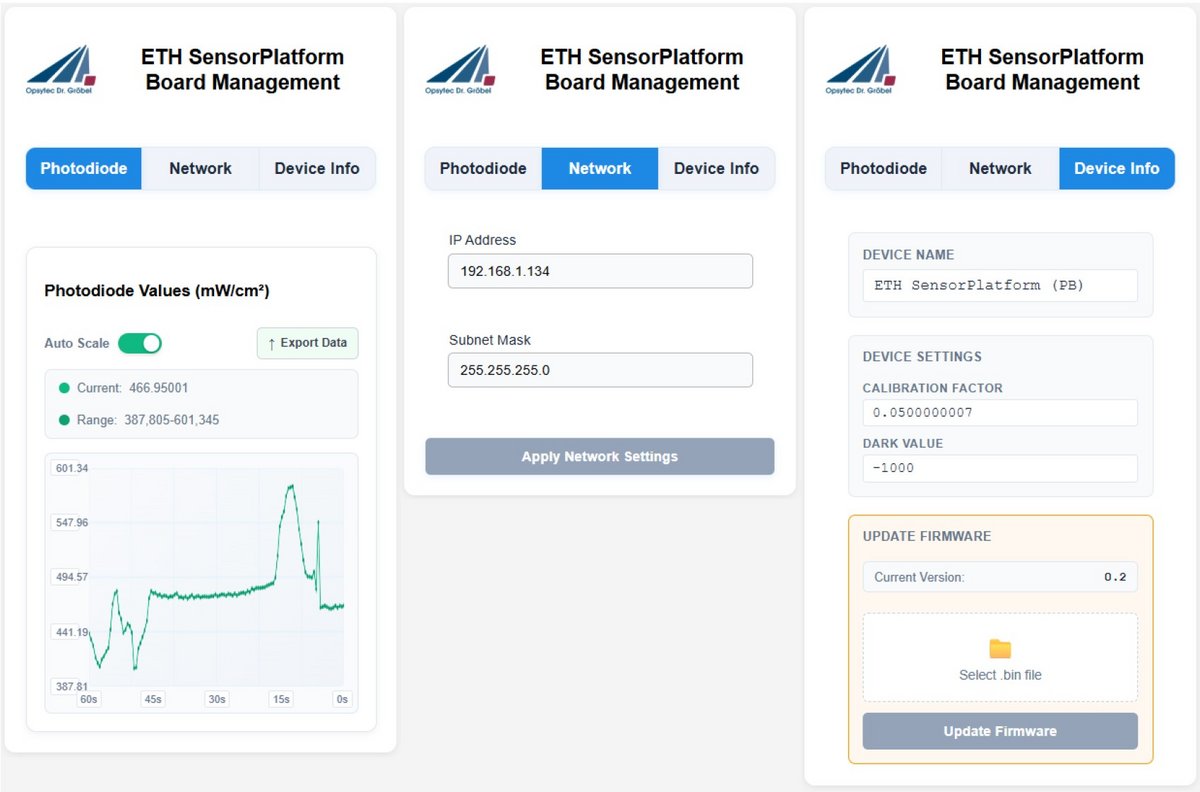


| Product type | UV sensor: UV sensors with LAN, PoE, Modbus TCP, HTTP/JSON and CSV export via the web server |
| Spectral range | UVC 200–280 nm, UVB 280–315 nm, UVA 315–400 nm, UVA+ 330–455 nm, UVBB 230–400 nm, VISB 400–480 nm, LUX 380–780 nm |
| Measuring range | 0–10,000 mW/cm²; 0–10,000 µW/cm² (optional) |
| Calibration uncertainty (typ.) | 4.5–6.0 % (k = 2) |
| Output / interface | Data protocols: HTTP / JSON, Modbus TCP; network interface: LAN / Ethernet (PoE) |
| Time resolution | up to 50 Hz |
| Calibration | traceable to PTB, factory calibration, ISO 17025 calibration optional (DIN EN ISO/IEC 17025:2018), recalibratable |
| Standards / guidelines | no product-specific standard; calibration per DIN EN ISO/IEC 17025:2018 available |
| Suitable for | UV disinfection; Water and environmental technology; Automation and process integration; Packaging and filling technology |
| Not suitable for | spectrally resolved measurement (peak wavelength, bandwidth); irradiance above 10000 mW/cm² (standard range); sensor temperatures above 60 °C; use under water or under pressure |
| Datasheet revision | Rev. 2026-09-08 (e_LAN_UV-sensor-PLC.net.pdf) |
The calibration uncertainty stated above is the expanded uncertainty of the calibration (k = 2, confidence level approx. 95 %) and applies to the calibration source and the calibration conditions. In use the measurement uncertainty is larger: spectral mismatch at the source actually used, the sensor temperature, ageing since calibration as well as distance and alignment to the source are added to it. How these combine into an uncertainty budget is explained under Measurement uncertainty in UV measurement.
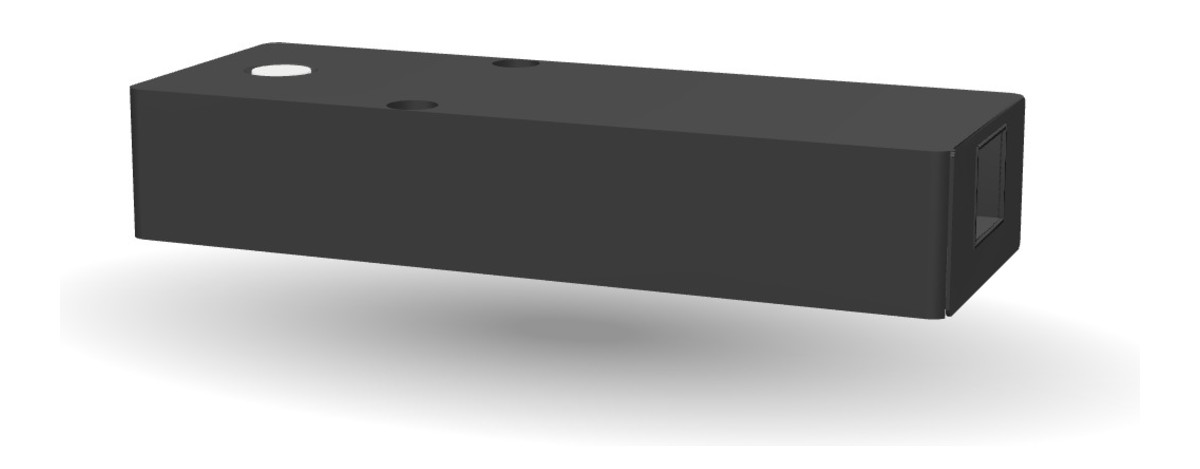
View the PLC.net as a 3D model
Look at the sensor housing and its connectors from every side – directly in your browser.
The PLC.net can be viewed from all sides in the 3D product viewer – true to the original, generated from the CAD design data. Housing shape, Ethernet connector and mounting dimensions can thus be examined in detail before planning.
Specifications of Ethernet PLC UV sensors and VIS sensors
| Power Supply | PoE, Type 1 |
| Current Consumption | < 150 mA |
| Measurement Ranges | 0–10,000 mW/cm² |
| 0–10,000 µW/cm² (optional) | |
| Resolution | 0.001 mW/cm² |
| 0.001 µW/cm² (optional) | |
| Dimensions | ~120 × 40 × 20 mm |
| Weight | 180 g |
| Data Protocols | HTTP / JSON, Modbus TCP |
| Web Server | Integrated |
| Data Export | CSV |
| Network Interface | LAN / Ethernet |
| Operating Temperature | 0 to 60 °C |
| Storage Temperature | -10 to 60 °C |
| Humidity | <80%, non-condensing |
| Response Time, Typical / Max | 20 ms / 100 ms |
| Button | 1, physical for |
| Reset, DHCP & | |
| Factory settings | |
| Calibration uncertainty (typ.) | 4.5–6.0 % (k = 2) |
| Linearity Error | < 1 % |
| Ageing per Year | < 3 % |
Can the UV sensor be integrated over Modbus TCP?
Yes. The PLC.net is a network-capable UV sensor: it sits on the network over Ethernet, is powered by PoE, and so needs neither its own power supply nor an analogue input at the controller. Several routes are available side by side – Modbus TCP for the classic PLC, and the HTTP interface with a JSON response for control systems and in-house software.
The difference from an analogue sensor lies less in the reading than in what travels with it: the digital interface carries sensor type, spectral range and calibration status. That makes a deviation distinguishable – an expired calibration becomes its own message instead of a process deviation nobody can explain.
Where an analogue connection suffices, the PLC sensors with 0–10 V or 4–20 mA are the simpler choice; where it should be serial, the digital PLC.D sensors with RS-485.
Frequently asked questions: PLC.net Ethernet UV sensors
The PLC.net is powered via Power over Ethernet per IEEE 802.3af from the network switch; a separate power supply is not needed. A single network cable is therefore sufficient for power and data, which simplifies installation at hard-to-reach measuring points. If no PoE switch is available, a PoE injector between the switch and the sensor takes over the power supply.
The sensor updates the reading typically every 20 ms, at the latest every 100 ms, and provides it simultaneously via Modbus TCP on port 502 and via the HTTP interface. This rate is sufficient for controlling a UV system via the PLC; for time profiles of individual lamp pulses with millisecond resolution a data logger such as the curelog with up to 2000 Hz is intended.
PLC.net is supplied in the same seven spectral ranges as the other PLC sensors: UVC 200–280 nm, UVB 280–315 nm, UVA 315–400 nm, UVA+ 330–455 nm, UVBB 230–400 nm, VISB 400–480 nm and LUX with V(λ) weighting. The measuring range extends to 10,000 mW/cm² as standard; for low-pressure UVC lamps in disinfection systems a sensitive version up to 10,000 µW/cm² is intended.
Yes. The PLC.net provides its readings over Modbus TCP on standard port 502, in Float32 format and in mW/cm², with a resolution of 0.001 mW/cm². It can therefore be attached to a Modbus master in the controller without additional hardware. The same values are available in parallel from an HTTP interface as JSON; the integrated web server also exports them as a CSV file.
Through a network-capable interface. The PLC.net sits on the network over LAN and provides the irradiance over Modbus TCP as Float32 in mW/cm² and over HTTP as JSON; both routes can be polled by common SCADA and process control systems. Alongside the reading, device information, calibration data and status parameters can be read – only then can a deviation be recognised as a calibration problem rather than a process problem.
The PLC.net processes the readings in the sensor and outputs them over LAN: as Modbus TCP registers or as JSON over HTTP. Several measuring channels and lamp assignments are provided for, so a system with several emitters can be mapped over one network. For evaluation without a control system, the integrated web server exports the data as CSV and shows a run-time chart; the calibration uncertainty is typically 4.5 to 6.0 % (k = 2).
The calibration certificate states the expanded calibration uncertainty with k = 2; for the PLC.net sensors it is typically 4.5–6.0 %. In use the measurement uncertainty is larger, because spectral mismatch at the source actually used, sensor temperature, ageing and measuring geometry are added to it. How these combine into an uncertainty budget is explained under Measurement uncertainty in UV measurement.
A UV sensor with an Ethernet (LAN) connection is suitable for the continuous monitoring of UV processes in automated systems, test benches, and industrial production environments. Ethernet communication allows measured values to be centrally recorded, documented, and integrated into control systems.
Integration into PLC systems is achieved via Modbus TCP. The sensor value is provided as a Float32 number in mW/cm². In addition, the wavelength and status can be read via registers.
DHCP server mode can be enabled using the built-in button. The sensor then provides a direct connection for a laptop and can be accessed at the IP address 192.168.100.1.
The HTTP interface allows direct access to current measurement values and device information over the network. The JSON output simplifies integration into customer-specific software, data loggers, test benches, and quality assurance systems.
The built-in web server allows measurement data to be exported as a CSV file. This enables measurement series to be documented, archived, and further processed in external analysis systems.
Order numbers, scope of delivery, accessories and versions
| Spectral range | Order number |
|---|---|
| UVC | 890010 |
| UVB | 890020 |
| UVA | 890032 |
| UVA+ | 890047 |
| UVBB | 890012 |
| VISB | 890041 |
| LUX | 890061 |
Scope of delivery: the PLC.net sensor and the factory calibration certificate, on request with an ISO 17025 calibration certificate. Please state the required spectral range with your order.
| Service | Order number |
|---|---|
| Factory calibration | 710000 |
| ISO 17025 calibration | 17025 |
Accredited calibration to ISO/IEC 17025 in our own calibration laboratory. On delivery the sensor is already factory-calibrated.