


UVC meter and UVC radiometer for 200–280 nm
UVC radiation disinfects water, air and surfaces, drives photochemical processes and is used in research to inactivate viruses, bacteria and fungi. Whether a UVC source achieves the required effect and whether people nearby are protected can only be demonstrated by a calibrated measurement of irradiance. UVC meters from Opsytec cover the spectral range from 200 to 280 nm and measure irradiance and – depending on the instrument – UVC dose on lamps, LEDs, chambers and systems.
Four questions decide which instrument fits: What spectrum does the source have? What irradiance is expected at the measuring point? What does the measuring geometry look like? And is an instantaneous value, a dose or permanent monitoring required?
Measuring UVC irradiance and UVC dose
Irradiance is the radiant power incident on a surface, given in W/m², mW/cm² or µW/cm²; 1 mW/cm² equals 10 W/m². UVC dose is the time integral of irradiance – for a constant source simply irradiance multiplied by time – given in J/m² or mJ/cm². In water disinfection the quantity referred to the medium is called fluence. Dose is what counts for inactivating microorganisms: at 1 mW/cm², 10 mJ/cm² are reached after 10 seconds.
Not every hand-held meter determines the dose itself. The RM-12 shows the instantaneous irradiance. RMD and RMD Pro and the RMD Touch integrate irradiance over time and display the dose directly; RMD Pro and RMD Touch also store measurement series as CSV files. The tinyTracker measures the dose as a dosimeter only 10 mm high that travels through the system with the product.
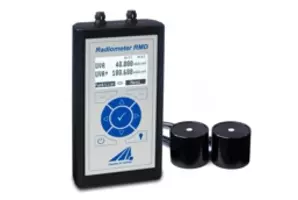
Radiometer RMD Pro
All-digital handheld radiometer for irradiance and dose with two sensor inputs and 8 GB memory.
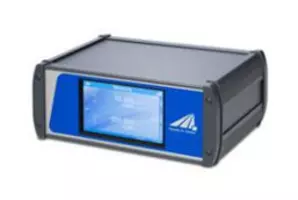
RMD Touch
Digital laboratory radiometer with touch display for irradiance and dose on two sensor inputs.

RM-12
Handheld meter for irradiance and illuminance with interchangeable sensors.

DVGW reference radiometer
Reference radiometer for monitoring UV drinking-water disinfection according to DIN 19294-3 (low pressure) and DIN 19294-4 (medium pressure).
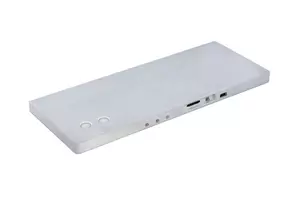
tinyTracker
Radiometer for conveyor systems only 10 mm high, measuring on both sides, recording up to 25 Hz.
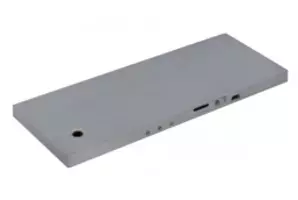
tinyTracker 172nm
Calibrated radiometer for 172 nm xenon excimer lamps, 10 mm flat for conveyor systems.
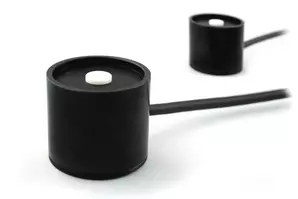
Radiometer sensors
Interchangeable UV and light sensors Ø 40 mm in seven spectral ranges for RMD Pro, RMD Touch and RM-12.
Which UVC meter suits which task
| Instrument | UVC measuring range | Dose | Typical task |
|---|---|---|---|
| RM-12 | 0–199 mW/cm², optionally 0–1999 mW/cm²; resolution 0.01 mW/cm² | no | Check and service measurements on UVC systems, battery-powered |
| RMD / RMD Pro | UVC sensor 0–1 W/cm²; UVC sensor for occupational safety 0–10 mW/cm²; resolution 0.001 µW/cm² | yes; RMD Pro with 8 GB memory | Disinfection trials, chambers, surfaces, occupational safety, measurement records |
| RMD Touch | UVC sensor 0–1 W/cm²; two channels simultaneously | yes; logging 1 s–1 h | Laboratory, long-term and ageing measurements |
| tinyTracker | 0–200 mW/cm² or 0–2 W/cm² | yes | Dose in conveyor and continuous systems, 10 mm high |
| tinyTracker 172 nm | 0–200 mW/cm² at 172 nm | yes | VUV xenon excimer lamps in inert gas |
| DVGW reference radiometer | 240–290 nm, 0–200 W/m² | yes (on the RMD Pro) | Reference measurement on drinking water systems according to DIN 19294-3 and ÖNORM M 5873-1 |
| UVC-SE, UVx-SE, PLC.D | UVC-SE 180–280 nm, up to 1000 W/m² | via the control system | Permanent monitoring in reactors and systems |
UVC measurement at 254 nm
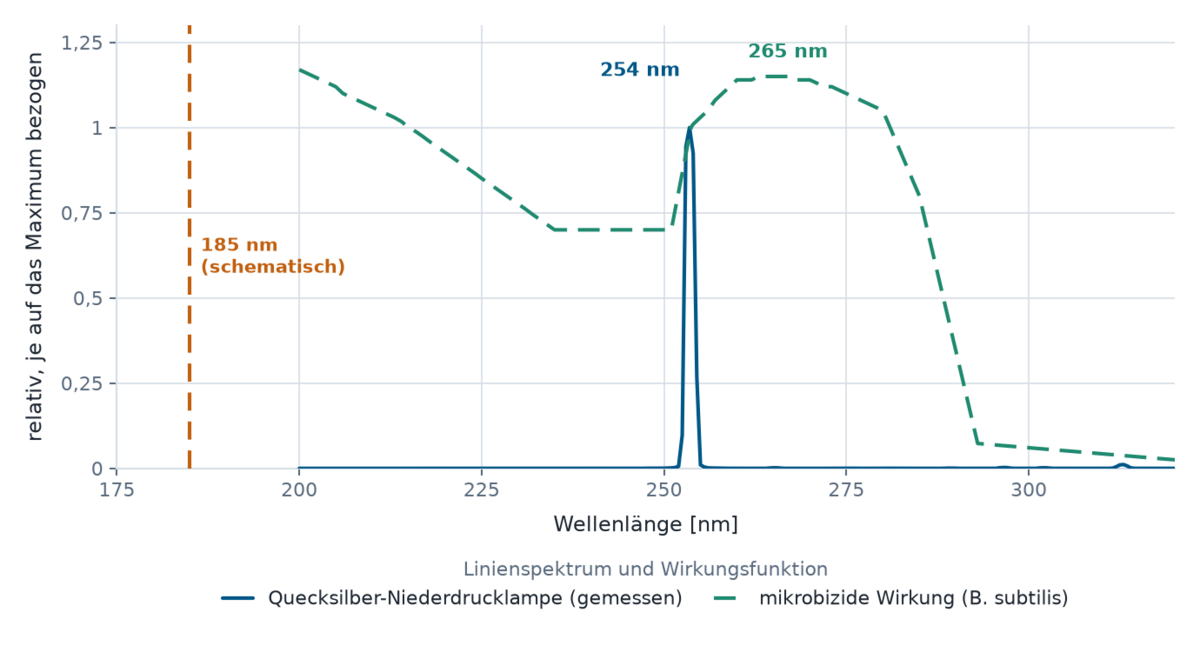
Low-pressure mercury lamps emit most of their UV power in a single line at 253.7 nm. Measuring this line is the classic task of UVC radiometry: the UVC sensor for 200–280 nm is calibrated on a low-pressure lamp and measures this source without spectral correction. All the studies evaluated here – from 0.065 mW/cm² behind an almost fully covered tube to 20 mW/cm² in a UVC flash – lie within the measuring range of a single UVC sensor on the RMD.
Medium-pressure lamps, by contrast, emit a broad spectrum with components in UVC, UVB and UVA; a sensor calibrated at 254 nm reads systematically wrong here. How the 254 nm line is produced and which measuring tasks need to be kept apart in systems is explained in Measuring and monitoring UVC radiation at 254 nm.
Measuring UVC LEDs correctly
Depending on the semiconductor material, UVC LEDs typically emit between 265 and 280 nm, with a bandwidth of about 10 nm. Part of their emission therefore lies right at the filter edge of the UVC sensor at 280 nm. With an LED at 275 nm the sensor cuts off the long-wavelength flank; at 280 nm the emission peak sits on the edge. Even small shifts in peak wavelength – between LED batches or from heating during operation – then change the reading more than the actual radiant power.
For UVC LEDs Opsytec therefore recommends a UVBB sensor (230–400 nm), whose spectral range covers the entire LED emission, calibrated on an LED with a matching peak wavelength. For low-pressure lamps the UVC sensor remains the right choice. The calibration laboratory keeps UV LEDs of various wavelengths as calibration sources. How large the error can become with an unsuitable calibration is shown in Spectral mismatch for UV sensors.
Far-UVC at 222 nm and VUV at 172 nm
Krypton chloride excimer lamps (KrCl*) emit at 222 nm in the far-UVC range from 200 to 230 nm. This wavelength is germicidal but barely penetrates the skin – the basis for use in occupied rooms, studied by Buonanno et al. [2] and Welch et al. [3], among others. Unfiltered lamps also have secondary emissions in the longer-wavelength UVC, which are decisive for the safety assessment; far-UVC luminaires for indoor use therefore carry a filter.
A UVC sensor covers 222 nm spectrally, but must be calibrated on a 222 nm source for this lamp type; a calibration at 254 nm would systematically misrepresent the irradiance of a KrCl lamp. The Opsytec calibration laboratory therefore calibrates UVC sensors on a 222 nm excimer lamp. Only a spectral measurement shows whether the filter actually suppresses the secondary emissions. Measured spectra of filtered and unfiltered KrCl lamps are available in the spectral database for UV lamps.
Xenon excimer lamps (Xe₂*) at 172 nm radiate in the vacuum UV. This radiation is absorbed by air within a few millimetres; UVC sensors with filter and diffuser do not detect it. For this there is the tinyTracker 172 nm, which measures the dose in inert gas directly at the substrate. Details are given in Measuring 172 nm VUV radiation from xenon excimer lamps.
UV drinking water disinfection: DVGW reference radiometer
In UV systems for drinking water disinfection according to DIN 19294-1 and DVGW W 294-1, a permanently installed sensor monitors the irradiance. A reference radiometer checks this system sensor at regular intervals. The requirements for the reference radiometer are set by DIN 19294-3 for low-pressure systems and DIN 19294-4 for medium-pressure systems; in Austria ÖNORM M 5873-1 applies.
The DVGW sensor does not evaluate the radiation across the whole UVC range but narrowband from 240 to 290 nm around the line at 253.7 nm. DIN 19294-3 prescribes this so that system radiometers from different manufacturers deliver comparable values on the same installation. The sensor measures up to 200 W/m², has an acceptance angle of 160° and is operated on the RMD Pro. For medium-pressure systems there is a separate reference sensor according to DIN 19294-4. All data are given on the DVGW reference radiometer page.
Permanent monitoring of UVC systems
A hand-held meter provides spot checks. Where a system has to be monitored during operation, a permanently installed sensor measures continuously and passes its signal to the control system:
- UVC-SE – pressure-water-resistant UVC sensor (180–280 nm, up to 1000 W/m²) with integrated amplifier for reactors and wet processes; output 0–10 V, 4–20 mA or 0–1 V.
- UVx-SE – waterproof sensor with G 3/4″ connection, also for medium-pressure lamps and CIP environments, up to 200 mW/cm².
- PLC.D – digital UV sensors with RS-485, RS-232 or USB and calibration status in the data protocol.
- PLC sensors with 4–20 mA, 0–10 V or 0–2 V for control systems.
The installed sensor is compared at fixed intervals with a calibrated hand-held meter at the same position, for example weekly with the RMD Pro.
UVC decontamination of rooms and surfaces
When rooms and surfaces are disinfected with mobile UVC devices, the dose depends strongly on distance and orientation. Surfaces in shadow or far from the source receive many times less than surfaces in the line of sight. In a hospital room, Lindblad et al. used an RM-22 radiometer, the predecessor of the RMD, and measured doses between 15.9 and 1,068 mJ/cm² depending on position, with a median of 266 mJ/cm² [4]. Measurements are therefore taken at the points that are to be disinfected – not only at the source.
Malayeri et al. have compiled the dose required for a given log reduction of bacteria, viruses, protozoa and algae [1]. The required exposure time follows from the measured irradiance as dose divided by irradiance. For the protection of people during UV disinfection, see Safety of UV disinfection.
[1] Malayeri, A. H. et al.: Fluence (UV Dose) Required to Achieve Incremental Log Inactivation of Bacteria, Protozoa, Viruses and Algae, IUVA.
[2] Buonanno, M. et al.: Germicidal Efficacy and Mammalian Skin Safety of 222-nm UV Light. Radiat. Res. 187 (2017) 483–491, doi:10.1667/RR0010CC.1
[3] Welch, D. et al.: Far-UVC light: A new tool to control the spread of airborne-mediated microbial diseases. Sci. Rep. 8 (2018), doi:10.1038/s41598-018-21058-w
[4] Lindblad, M. et al.: Ultraviolet-C decontamination of a hospital room: Amount of UV light needed. Burns 46 (2020) 842–849, doi:10.1016/j.burns.2019.10.004
Where UVC was measured – irradiance levels from studies
How much UVC arrives where disinfection takes place? In studies that worked with Opsytec meters and irradiation chambers, the range extends from 0.065 mW/cm² behind an almost fully covered tube to 20 mW/cm² in a UVC flash – more than three hundred times as much. Most measuring points lie between 0.3 and 15 mW/cm². Distance, the number of lamps and whether the radiation arrives directly or in shadow make the difference. That is why measurements are taken where the effect is to occur.
At the lower end, an instrument with a resolution of 0.01 mW/cm² shows only one or two digits; the RMD resolves 0.001 µW/cm².
| Measuring point | Irradiance in mW/cm² | Source and distance | Study | Opsytec instrument |
|---|---|---|---|---|
| Plants under a UVC flash | 20 (flash, 1 s) or 0.33 (continuous light)¹ | 10 amalgam lamps, 254 nm | Jazayeri et al. 2024 | RM-12 |
| Wastewater sample under the lamp | 14.8 | Low-pressure Hg lamp 15 W, 4 cm | Leong et al. 2023 | RM-12 |
| Hand-held UVC device for hygiene checks | 5 or 10 | UVC LEDs 275 nm | McCoy Sanders et al. 2024 | RMD Pro |
| Worn FFP2 masks in the chamber | 10³ | Chamber BS-02, 8 tubes, 15 cm | Vaupel et al. 2024 | Chamber BS-02 with UV-MAT |
| Cling film for beef | 8 | Chamber BS-04, 20 UVC lamps | Mahmud et al. 2024 | Chamber BS-04 |
| Masks in the drawer box | 5.56 ± 0.10 | Amalgam lamp, 10 cm | Harfoot et al. 2022 | tinyTracker |
| Wastewater under UVC LEDs | 4.08 or 0.33 | LED modules 275 nm or 280 nm, 4 cm | Leong et al. 2023 | RM-12 |
| Microphones in the disinfection box | 0.52–7.19, depending on position | 2 UVC lamps, reflective inner walls | Vignali et al. 2022 | Measurement by Opsytec |
| Juice in tubes through the chamber | 0.2–10.7, adjustable | Chamber BS-04, 20 lamps, 23 cm | Woll et al. 2024 | RM-12 UVC sensor |
| Virus droplets in the irradiation box | approx. 1.4 | 2 tubes of 6 W, 36 cm | Martínez-Antón et al. 2021 | RMD |
| 3D-printed parts in an ageing test | 1.0 | Chamber BS-02, 24 hours | Amza et al. 2021 | Chamber BS-02 |
| Mpox viruses on glass, steel and plastic | 0.82 | UVC lamp 254 nm, 30 cm | Gidari et al. 2026 | RMD |
| Hand-held UVC device above the sample | approx. 0.7² | battery-powered, 254 nm, 50 cm | Ruetalo et al. 2021 | UV-C dosimeter Dr. Gröbel |
| Fungal spores under UVC LEDs | 0.58 | UVC LED 275 nm | Baek et al. 2025 | RMD |
| Strawberries in a polytunnel at night | approx. 0.1¹ | UVC LEDs 276 nm, 20 s | Riikonen et al. 2024 | RM-22 |
| Lamp covered except for a slit | 0.065–0.080 | 2 tubes of 6 W, 5 mm slit, 36 cm | Martínez-Antón et al. 2021 | RMD |
| Intensive care room with UVC tower | dose only: 15.9–1,068 mJ/cm² | mobile UVC tower, 10 measuring points | Lindblad et al. 2020 | RM-22 (predecessor of the RMD) |
| Frequently touched surfaces in hospital | dose only: mean 29 mJ/cm² | UVC robot | Casini et al. 2025 | — |
¹ Calculated from the dose and exposure time given in the paper. ² Given in the paper as 0.7 mJ/cm² per second. ³ Nominal value of the chamber at full power. All values as reported by the authors (1 W/m² = 0.1 mW/cm²); authorship and content rest with the respective research groups. Further work with Opsytec instruments: Publications by customers.
Calibrated UVC sensors from the accredited laboratory
The quality of a UVC measurement depends on the calibration of the sensor – and on whether the calibration source matches the spectrum being measured. All radiometers and sensors are supplied calibrated, traceable to national standards. The Opsytec calibration laboratory is accredited by DAkkS according to DIN EN ISO/IEC 17025 and calibrates sensors from 200 to 1000 nm at irradiances from 0.2 µW/cm² to over 10 W/cm². The typical calibration uncertainty of the UVC sensors is 4.5–6.0 % (k = 2); in use, spectral mismatch, temperature, ageing and geometry add to this (Measurement uncertainty in UV measurement).
Besides the standard sensors there are solutions for special measuring tasks: XT sensors for very high irradiance, UV probes for measuring points that are hard to reach and custom designs for your own geometries. The UV sensor finder suggests the right sensor by application and wavelength.
Frequently asked questions about UVC meters
Can I also measure UVC LEDs with a UVC meter?
Yes, but not equally well with every sensor. The emission of UVC LEDs at 265–280 nm extends to the filter edge of the UVC sensor at 280 nm; small shifts in peak wavelength then distort the reading. For UVC LEDs Opsytec recommends a UVBB sensor (230–400 nm), calibrated on an LED with a matching wavelength. For low-pressure mercury lamps at 254 nm the UVC sensor is the right choice.
Which UVC meter measures the UVC dose?
RMD, RMD Pro and RMD Touch display the dose in J/m² alongside the irradiance; RMD Pro and RMD Touch also store measurement series as CSV files. The tinyTracker measures the dose as a flat dosimeter passing through the system. The RM-12 shows only the instantaneous irradiance – the dose is then irradiance multiplied by time.
Can the RMD measure very low UVC irradiance such as 0.2 µW/cm²?
Yes. With the UVC sensor for occupational safety (measuring range 0–10 mW/cm²) the RMD reliably detects irradiance from about 0.05 µW/cm², for example stray radiation at the workplace. For such measurements we recommend an averaging time of 2 s, an offset adjustment and a tripod.
Which UVC value is relevant for occupational safety?
The exposure limit for artificial optical radiation is an effective dose of 30 J/m² per day, weighted with the action spectrum S(λ). Because UVC is weighted particularly heavily in this range, even very low irradiance levels approach the limit over a working day. There is therefore a dedicated, highly sensitive UVC sensor with 0–10 mW/cm² for the RMD to demonstrate occupational safety. Assessment and measures: Safety of UV disinfection.
Is the RMD suitable for disinfection conveyors and continuous systems?
The RMD Pro records readings and is therefore suitable in principle for conveyor applications. Because of their low height, however, the tinyTracker, the curelog or the spectrally measuring UVpad usually fit better, as they travel through the system with the product.
mW/cm² or W/m² – which unit is correct?
Both. 1 mW/cm² equals 10 W/m², 1 mJ/cm² equals 10 J/m². Studies on disinfection usually use mW/cm² and mJ/cm², standards for water disinfection W/m² and J/m². The radiometry calculator converts the units.
How does a UVC radiometer differ from a simple UV meter?
Many simple UV meters are designed for UVA or the UV index and do not detect UVC at all or only inaccurately. A UVC radiometer needs a sensor with the spectral range 200–280 nm, cosine correction for obliquely incident radiation and a calibration on a source with a matching spectrum – documented by a calibration certificate.
How often does a UVC meter have to be calibrated?
There is no generally prescribed interval. Twelve months is a practical starting point for many UV meters, to be confirmed or adjusted on the basis of your own measurement history. Frequent use, high doses, heat and contamination argue for a shorter interval. More on this under Calibration interval for UV measuring devices.