



UV-MAT – dose controller and UV controller for irradiation chambers
The UV-MAT is a dose and irradiation controller for irradiation chambers and UV systems. It measures the irradiance continuously with calibrated radiometric sensors and stops the irradiation as soon as the set target dose is reached. The applied dose therefore stays constant even when the lamp output drifts with ageing, contamination or temperature – experiments remain comparable over months. The setting range runs from 0 to 1,000,000 J/cm² at a resolution of 1 mJ/cm², and two spectral ranges can be set and controlled separately.
Calculate UV dose and exposure time
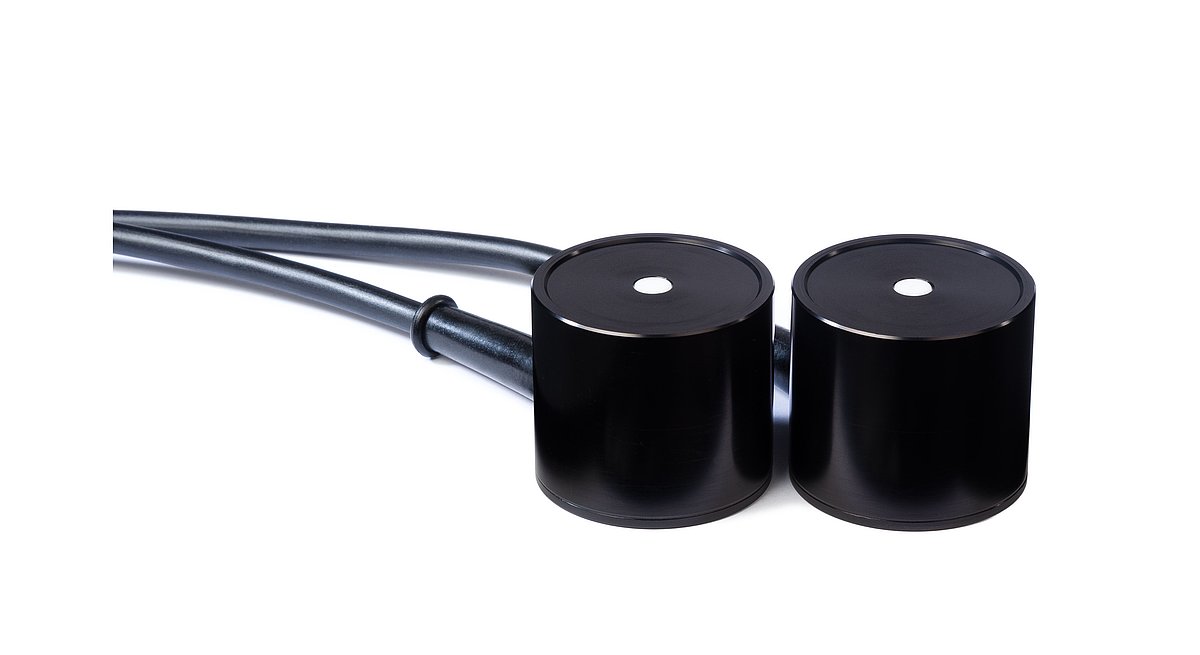
The measurements are made with calibrated radiometric sensors. The built-in diffusers ensure the cosine correction that is required for non-vertical irradiation.
The sensor contains an extremely precise analog-digital converter and a temperature sensor. The integrated diffuser ensures the required cosine correction. The sensors are calibrated with traceability to PTB (Physikalisch Technische Bundesanstalt, the German national test authority); after being calibrated, they are supplied with a factory calibration certificate; an ISO 17025 calibration certificate from our accredited calibration laboratory is available as an option. The memory in the sensor contains all sensor identifications and the calibration history.
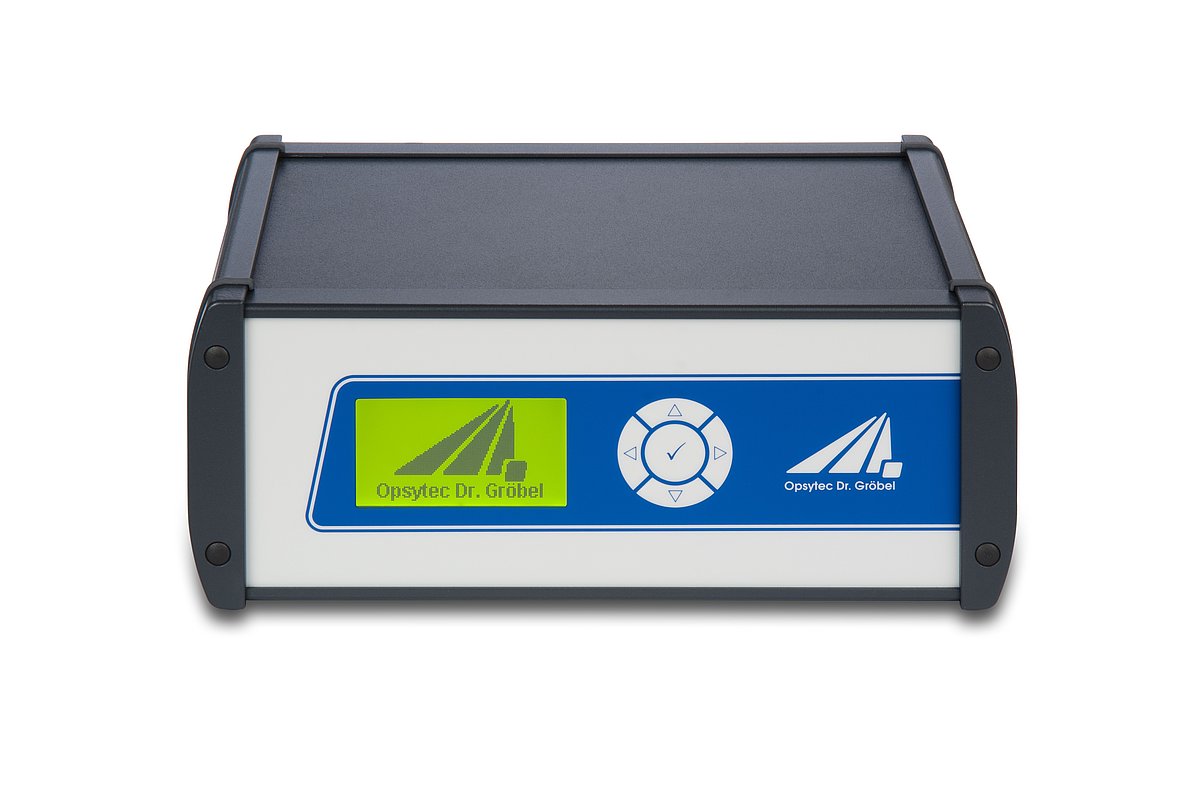
We offer two irradiation control systems for our irradiation chambers, the UV-MAT and the UV-MAT Touch.
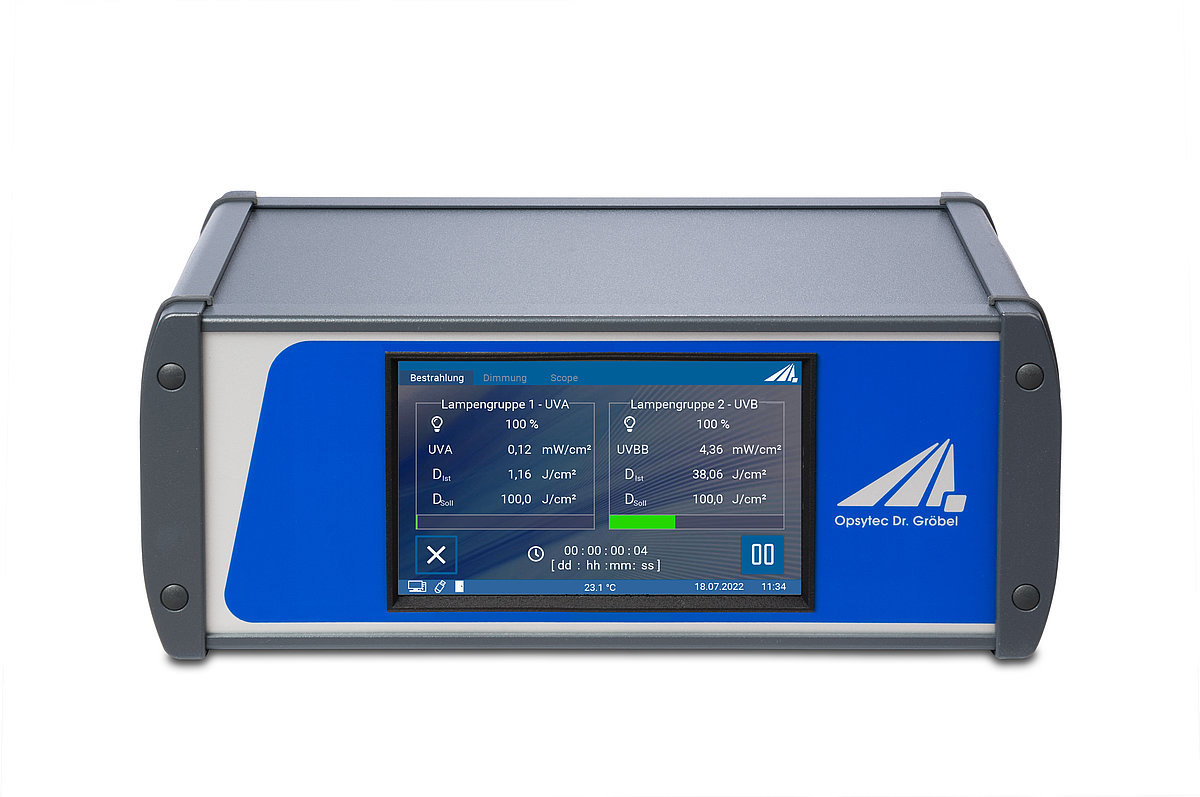
The high-resolution capacitive touchscreen of the UV-MAT Touch enables simple operation. The powerful Cortex ARM processor ensures longevity and update capability, allowing new functions to be implemented on site. The device and the PC software are compatible with Windows 10/11. Numerical and graphical single and multi-channel irradiations, oscillograms and settings are clearly displayed. Parameterization is intuitive and password-protected directly on the UV-MAT Touch.
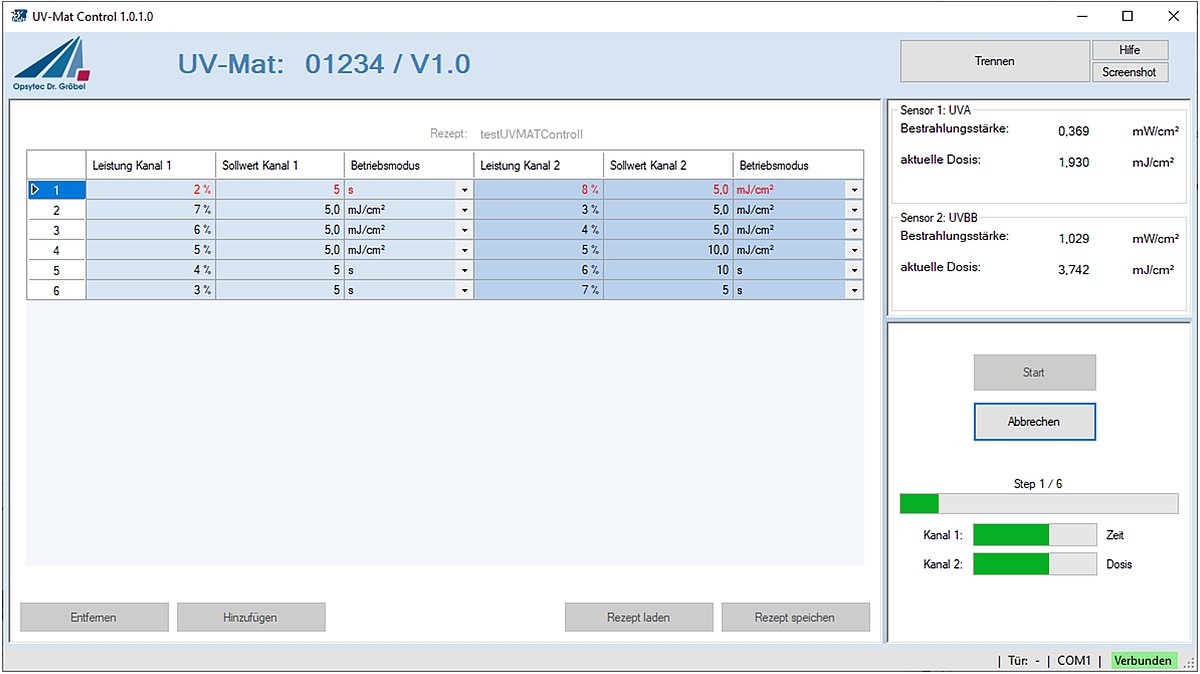
PC control of the UV-MAT Touch is available as an option, allowing multi-stage irradiations and complete documentation of the irradiation to be carried out.
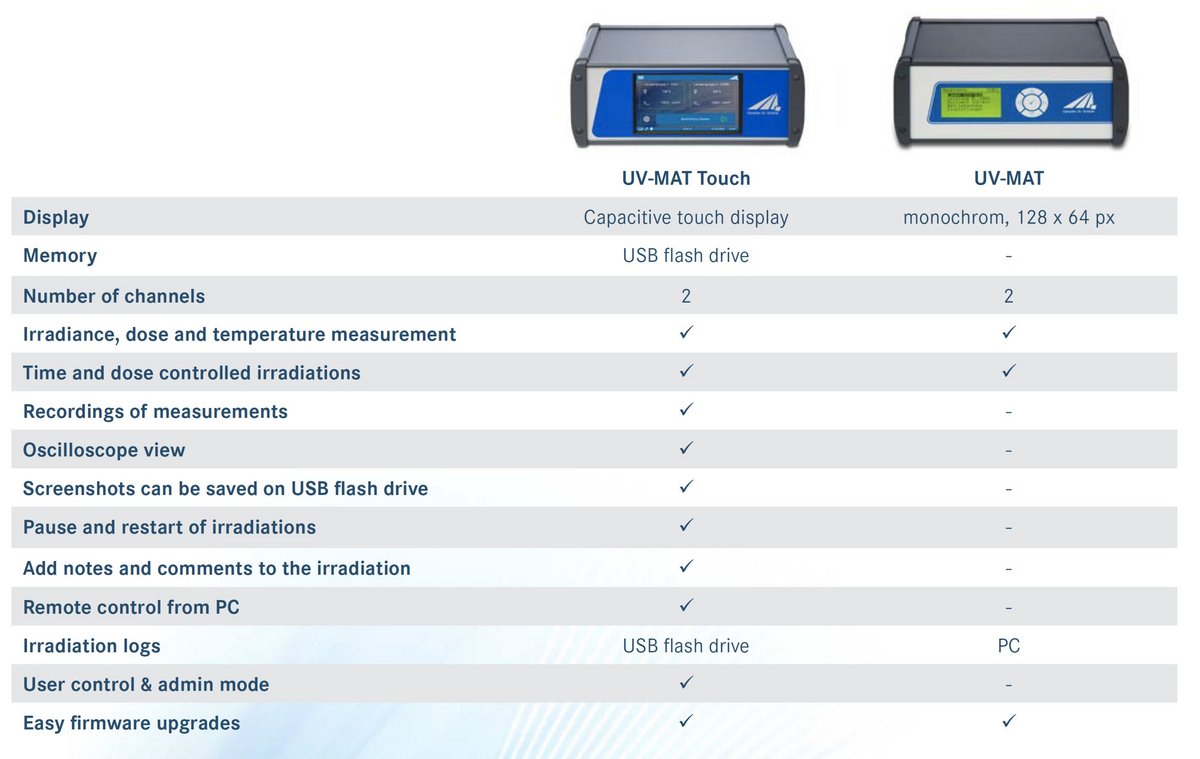
Highlights of UV dose controller UV-MAT
- Optional for all irradiation chambers
- Controls two spectral ranges
- Precise radiometric sensors
- Built-in sensor identification
- Security functions to avoid doubled irradiation and password protections for important settings
- Integrated timer
- Function to calculate irradiance at sample position from sensor position data
Technical data UV dose controller UV-MAT
| Sensor connectors | 24 bit, fully digital |
| Number of sensors | 2 pcs (for BS series) / 1 pc (for BSL series) |
| Dose range | 0–1,000,000 J/cm² |
| Dose resolution | 1 mJ/cm² |
| Irradiation time | 1 s to 999 days (BS series) / 0.01 s to 9999 h (BSL series) |
| PC interface | USB 2.0 |
| Sensor identification | yes |
| Dimensions | 185 mm x 251 mm x 100 mm |
| Operation temperature | 5–60 °C |
| Spectral ranges | UVC, UVB, UVA, UVA+ or LUX |
| Calibration uncertainty (typ.) | 4.5–6.0 % (k = 2) |
| Linearity error | below 1 % |
| Ageing per year | below 3 % |
Functions and operation
The UV-MAT controls the irradiation in all our irradiation chambers. It brings these functions:
 | Dose control The UV-MAT measures the irradiance continuously and ends the irradiation once the set target dose is reached. The dose therefore stays independent of lamp ageing, soiling and temperature. |
 | Timer As an alternative to dose control the UV-MAT offers an adjustable timer for time-controlled irradiations between 1 s and 999 days (BS series) or 0.01 s and 9999 h (BSL series). |
 | Irradiation records Irradiations can be recorded with a PC. The UV-MAT Touch also records them to a USB stick without a PC. |
 Similar to illustration | Sensor holder The sensor holder fixes the radiometer sensors inside the irradiation chamber. For measurements on the sample the sensors can be removed; the UV-MAT can be adjusted to this by a factor. |
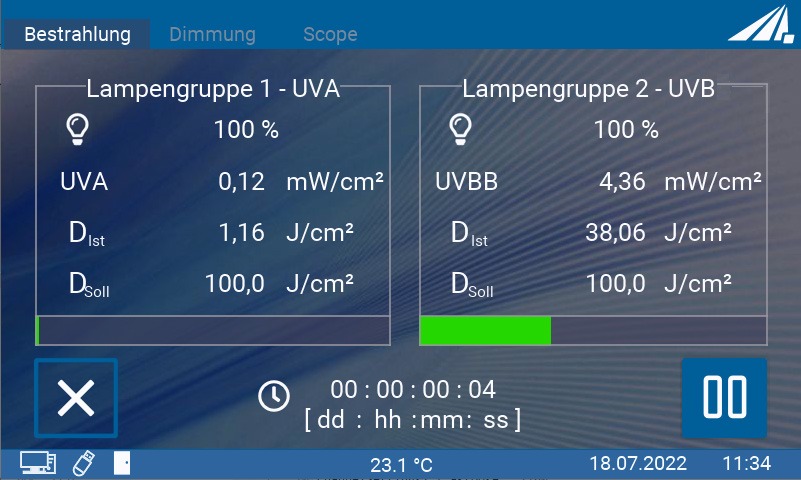
The screen shows the irradiance, the target and the actual dose per lamp group as well as the remaining time. The tabs lead to the dimming and the oscilloscope view.
The two irradiation controls compared
| Feature | 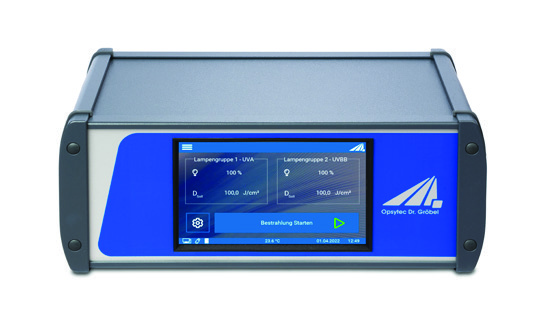 | |
|---|---|---|
| Display | capacitive touch display | monochrome, 128 x 64 px |
| Memory | USB stick | – |
| Number of channels | 2 (BS) / 1 (BSL) | 2 (BS) / 1 (BSL) |
| Irradiance, dose and temperature measurement | yes | yes |
| Time- and dose-controlled irradiations | yes | yes |
| Recording of measurements | yes | – |
| Oscilloscope view | yes | – |
| Screenshots can be saved to a USB stick | yes | – |
| Pausing and restarting irradiations | yes | – |
| Adding notes and comments to an irradiation | yes | – |
| Remote control from a PC | yes | – |
| Irradiation records | on a USB stick | on the PC |
| User management and admin mode | yes | – |
| Simple firmware upgrades | yes | yes |
Both controls use the same sensors, so one sensor can be used with either device.
The UV-MAT Touch is operated through a high-resolution capacitive touchscreen. A Cortex ARM processor provides durability and the ability to update - new functions can be installed on site. The device and the PC software are compatible with Windows 10 and 11. Single- and multi-channel irradiations are shown numerically and graphically, together with oscillograms and the settings. Parameters are set directly on the device and are password protected.
| Sensor inputs | 24 bit, fully digital |
| Number of sensor inputs | 2 (BS series) / 1 (BSL series) |
| Dose setting range | 0 to 1,000,000 J/cm² |
| Dose resolution | 1 mJ/cm² |
| Irradiation time | 1 s to 999 days (BS series) / 0.01 s to 9999 h (BSL series) |
| PC interface | USB 2.0 |
| Sensor recognition | yes |
| Dimensions | 185 × 251 × 100 mm |
| Permissible operating temperature | 5 to 60 °C |
| Feature | UV-MAT Touch | UV-MAT |
|---|---|---|
| Display | capacitive touch display, 5″ WVGA | graphic, 128 × 64 px, monochrome |
| Display output | irradiance and dose, oscilloscope view | irradiance and dose |
| Data recording rate | adjustable: 1 s to 1 h | – |
| Recording period | > 24,000 h | – |
| Storage interface | 1 × USB stick (up to 32 GB) | data export via USB |
Order numbers, scope of delivery, accessories and versions
| Order number | 820930 |
|---|---|
| Display | capacitive touch display, 5″ WVGA |
| Display output | irradiance and dose, oscilloscope view |
| Data recording rate | adjustable: 1 s to 1 h |
| Recording period | over 24,000 h |
| Storage interface | 1 x USB stick (up to 32 GB) |
The touch version with a 5-inch capacitive display, oscilloscope view and recording to a USB stick - no PC needed.
| Order number | 820920 |
|---|---|
| Display | graphic, monochrome, 128 x 64 px |
| Display output | irradiance and dose |
| Data export | via USB |
The basic version with a monochrome graphic display; the readings can be transferred to a PC via USB.
| Designation | Order number |
|---|---|
| PC software for the UV-MAT Touch | 860901 |
Complex, multi-stage irradiations - for example a pre-irradiation with UVA at low irradiance followed by a high-intensity UVC irradiation - can be parameterised with the remote control option. Up to 30 dose- or time-controlled steps and pauses are possible. At the same time the irradiation is logged and stored on the PC.