


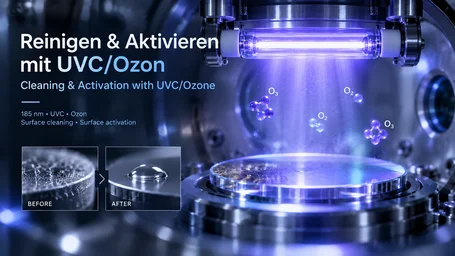
Cleaning & activation with UVC/ozone
Measurand: UVC irradiance at 185/254 nm, ozone concentration
UVC radiation at 185 nm splits oxygen and generates ozone, which oxidises organic residues on surfaces and raises their surface energy. The article covers principles, process limits and suitable equipment.
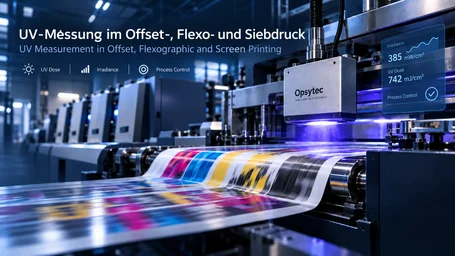
UV measurement in printing
Measurand: irradiance in mW/cm², dose in mJ/cm² under the web
In UV curing of printing inks the dose determines through-cure, adhesion and migration. The article shows which quantities are measured in web and digital printing and how travelling radiometers secure the process window.
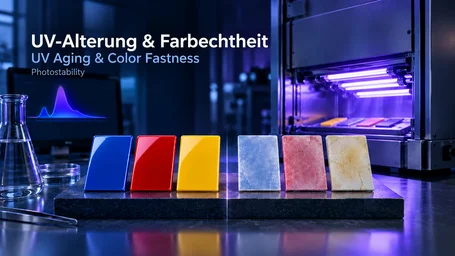
UV aging & color fastness
Measurand: spectral irradiance and dose at the sample plane
UV ageing makes plastics, coatings and textiles yellow, embrittle and fade. The article shows how the long-term effect is reproduced in irradiation chambers within days instead of years and which test methods apply.
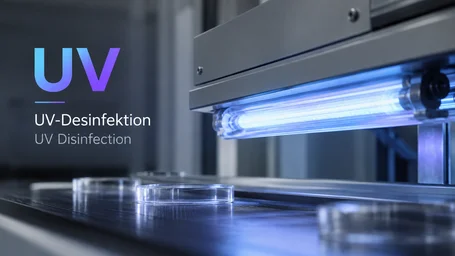
UV Disinfection
Measurand: fluence in mJ/cm², organism-specific dose-response curve
UV disinfection inactivates bacteria, viruses and protozoa with UVC between 200 and 280 nm without adding chemicals to the medium. The article explains fluence, dose-response curves and measurement at the reactor.
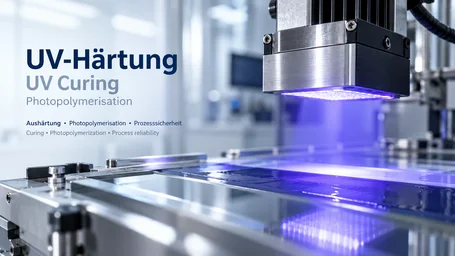
UV Curing
Measurand: spectral irradiance, dose and dose rate at the curing plane
Whether a UV cure succeeds is decided by three conditions at once: the spectrum must excite the photoinitiator, the dose rate must suffice and oxygen must not inhibit the surface. The article explains how all three are measured.
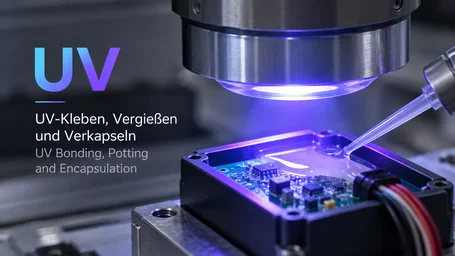
UV Bonding, Potting and Encapsulation
Measurand: dose behind the joining part, transmittance at the curing wavelength
In UV bonding what counts is not how much radiation the source emits but how much reaches the bond line – the part acts as an optical filter. The article shows how transmittance and dose in the gap are determined.
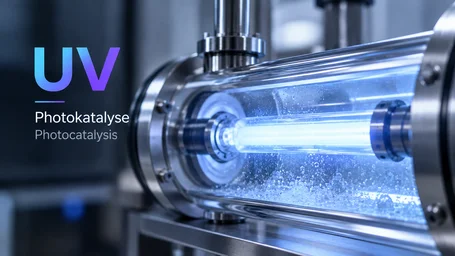
Photocatalysis
Measurand: spectral irradiance and photon flux at the catalyst
Photocatalysis speeds up chemical reactions through light at a semiconductor that is not itself consumed. The article shows why photon flux and spectral irradiance at the catalyst are the decisive quantities.
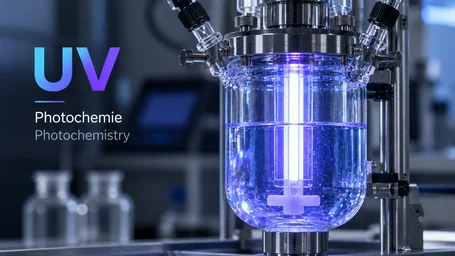
Photochemistry
Measurand: photon flux in µmol/s, quantum yield
Photochemistry means reactions triggered by absorbed photons – light is a reagent, not a heat source. The article explains photon flux and quantum yield as the common basis of several application fields.

Hydrogen Production
Measurand: photon flux and spectral distribution of the excitation
Photocatalytic hydrogen production generates hydrogen directly from water and light at a semiconducting catalyst. The article shows why photon flux has to be part of any credible efficiency figure.