


UV FAQs - especially for the use of UV sensors and UV light sources
These FAQs answer recurring questions on the use of UV sensors and UV light sources – for UV curing, disinfection, materials testing and occupational safety alike. This page covers calculating the photon flux density PPFD and the dose quantities SED and MED.
The remaining answers sit with their topic:
- Measuring UV – choosing the spectral and measuring range, how the sensors work, calibration intervals, measurement system analysis, spectral mismatch
- UV knowledge – radiometric and photometric quantities, spectral ranges and standards
- UV sources & lifetime – UV LEDs and lamps, lamp cooling, ageing, a broken UV lamp, irradiance from the spectrum
- UV as a tool – curing, printing, cleaning, UV resistance of the materials used
- Safety, Standards & Regulation – UV erythema in the workplace, RoHS, PFAS
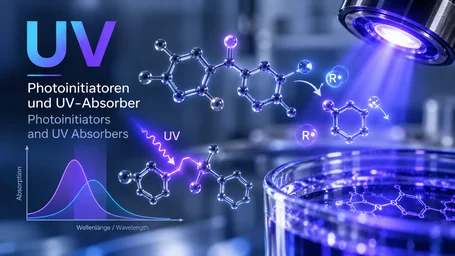
Photoinitiators & UV absorbers
Measurand: absorption spectrum versus the source's emission spectrum
Photoinitiators use UV to cure coatings, inks and adhesives in fractions of a second; UV absorbers keep the same radiation away from plastics and skin. The article compares spectra, applications and approvals of both groups.

UV aging of 3D printing materials
Short answer: ASA outdoors, PETG and PLA indoors only
Of four 3D printing materials compared, only ASA is designed for lasting UV and weathering exposure outdoors; PLA and standard PETG are not. The article shows the measurement results from the irradiation chamber.
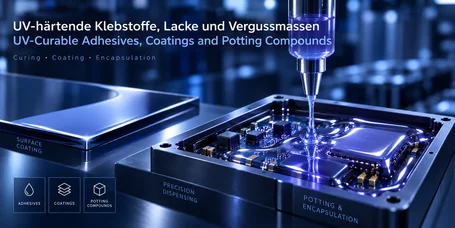
UV-curing adhesives, coatings and compounds
Measurand: irradiance and dose within the photoinitiator's absorption band
UV-curing adhesives, coatings and potting compounds cross-link within seconds once the photoinitiator absorbs matching radiation. The report classifies free-radical and cationic systems and names the process quantities that decide through-cure.
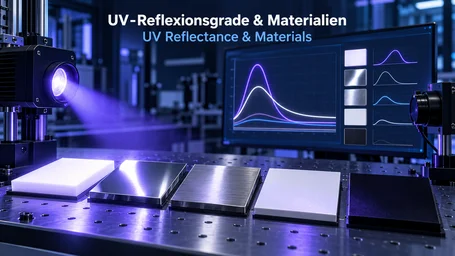
UV reflectance
Over 70 verified UV reflectance values – aluminium, stainless steel, PTFE, paints, building materials – with wavelength, measurement method and source.
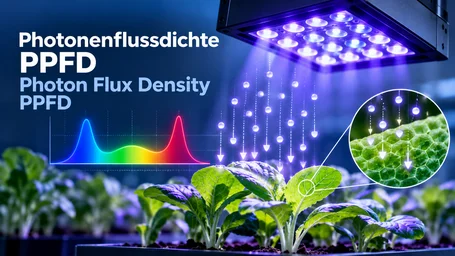
Calculation of the photon flux density PPFD
Short answer: PPFD in µmol/(m²·s) from the spectrum, not from lux
Photosynthetic photon flux density (PPFD) counts photosynthetically active photons between 400 and 700 nm per area and time. The article shows the conversion from the spectrum and why watts alone say nothing for plants.
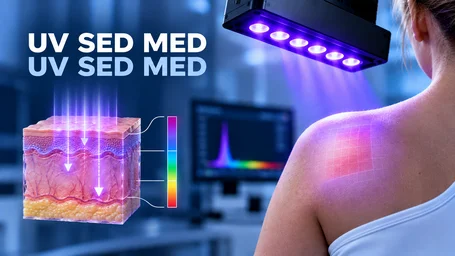
Standard Erythema Dose (SED) and Minimal Erythema Dose (MED)
Short answer: SED is a unit, MED is a skin reaction
SED and MED do not measure the same thing: the Standard Erythema Dose is a standardised physical unit (1 SED = 100 J/m² erythemally weighted), the Minimal Erythema Dose an individual reaction threshold. The article explains both and how they relate.